
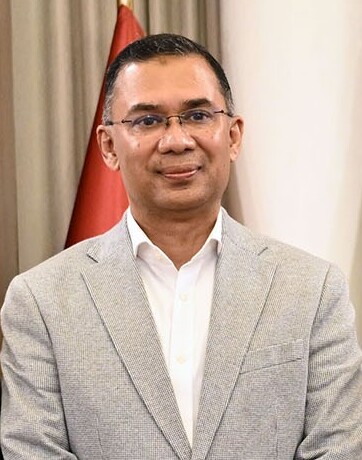
The politics of Bangladesh have been characterized by great dynasties, ideological politics, mass movements and comebacks. Among the most interesting characters in this story is Tarique Rahman – a leader with a long history of privilege, controversy, exile, courtroom battles and a subsequent comeback to leadership in the country.
In 2026, after a landslide electoral triumph of the Bangladesh Nationalist Party (BNP), Tarique Rahman became the prime minister-designate of Bangladesh, a very dramatic political resurrection in the South Asian history. His success is not merely a success story as pertains to an individual per se but a continuity of the Zia political family and a significant shift in the democratic development of Bangladesh.
The complete account of Tarique Rahman is his childhood, political rise, scandals, exile, his redemption in the court of law, and his idea to see the future of Bangladesh.
Childhood and Political Origins.
Tarique Rahman was born on November 20, 1965, in Dhaka which was in East Pakistan (now Bangladesh). He was raised in a family that was highly networked in politics in the country. His father Ziaur Rahman is a distinguished military veteran and one of the instrumental figures in the Bangladesh Liberation War that took place in 1971. Ziaur Rahman succeeded as President and in 1978 established the Bangladesh Nationalist Party.
Khaleda Zia became a politician after the assassination of Ziaur Rahman in 1981 and eventually became the Prime Minister. Accustomed to this atmosphere since his early years, Tarique Rahman was introduced to the world of political maneuvering, deliberation of politics, and the demands of political life.
He attended BAF Shaheen College in Dhaka, and then joined the University of Dhaka. He started as a student of law before moving to International Relations. He never graduated but the exposure to education gave him an idea of governance and diplomacy.
Rahman established business connections in the textiles, shipping as well as other commercial fields before he officially joined politics. These experiences subsequently defined the emphasis on economic development and activity in the private sector.
Entry into Politics
In 1988, Tarique Rahman formally became a member of BNP and a first-time member, in the Bogra district, the political stronghold of the Zia family. In the elections of 1991, which once again injected parliamentary democracy back into Bangladesh after many years of military leadership, he took a low profile part in the organization of the campaign.
The BNP took a back turn when Khaleda Zia took office in the year 1991. Although Tarique was still a comparatively low profile figure, he gradually gained influence within party setups, especially among the youth and on the grassroots organizers.
Towards the end of the 1990s he was one of the most important organizational architects in the BNP. He concentrated on reinforcing the party networks at the district levels, the process of choosing candidates, and the internal coordination.
Rise During the 2001–2006 BNP Government
In 2001, the BNP came back to power with a resounding mandate. Tarique Rahman also gained massive sway in the party during this time. He was not formally in a government office, but he was generally considered to be one of the key decision-makers within the party.
According to his critics he worked on a powerful political office which served as an unofficial power basis. According to those who supported him, he was modernizing the management of the party and enhancing communication between the leadership and the grass-root activists.
But this was also the time when corruption, favoritism and abuse of power were accused. The opposition parties especially Awami League stated that he was meddling in government contracts and appointments. The BNP always refuted these allegations saying that they were politically motivated attacks.
The 2004 Grenade Attack
Among the most tragic events in Bangladesh politics dates back to the 21st of August 2004; when an Awami League rally was attacked by the use of grenades against an opposition party leader Sheikh Hasina. The attack resulted in killing 24 and injuring hundreds of people.
Tarique Rahman was alleged to have been a part of the conspiracy several years later when he held power under the Awami League government. In 2018, a special tribunal convicted him in absentia to life imprisonment.
Rahman and the BNP fiercely refuted the charges stating that the accusations were politically motivated. The case itself was one of the most controversial cases in the legal and political history in Bangladesh.
In 2024, the conviction was reversed in an appellate court due to procedural irregularities and insufficiency of evidence following a change in the political circumstances. This emancipation changed everything in the politics of Rahman.
The Crackdown and Exile in London 2008.
During 2007-2008, Bangladesh was under a military-led caretaker government which undertook an anti-corruption campaign in which the leading political figures of the two major parties were targeted.
Such is the period when Tarique Rahman was arrested and detained. In 2008, he travelled to London after he was released on bail to get medical treatment. What was initially a temporary exile was to become almost 17 years of exile.
Rahman remained the Acting Chairman of the BNP based in London. He still controlled the decisions of the party, nomination of candidates, and the political strategy, despite the fact that he was physically absent.
His years in exile were symbolic – his followers depicted him as a victim of political persecution, the critics said he was wrongly evading responsibility.
Criminal Cases and Set-Free.
During the rule of Sheikh Hasina, there were several times of case against Tarique Rahman. These included:
• Laundering of money charges.
• Corruption charges
• Arms smuggling accusations
• Sedition-related cases
A number of sentencing was done in absentia. Nevertheless, in 2024, following significant political shifts, higher courts started looking into such cases. Most of the major convictions will be reversed between 2024 and 2025.
The Awami League Government was also defeated by the military.
In 2024, a wave of protests led by students shook Bangladesh and turned into a political crisis in the country. Incumbent government with long rule by Sheikh Hasina had to contend with strong opposition against it with claims of dictatorial rule and poor economic performance.
The ultimate downfall of Awami League government transformed the politics of Bangladesh. It left a vacuum in the opposition, especially the BNP, to re-establish and re-join the mainstream electoral politics.
This was the start of political resurgence of Tarique Rahman.
Return to Bangladesh
On 25 December 2025, Tarique Rahman came back to Dhaka after close to 17 years spent in a foreign country. He was welcomed by thousands of BNP followers.
Khaleda Zia died only a few days after his coming back. Rahman officially became Chairman of the BNP on January 9, 2026, becoming a firm leader.
The party was also undergoing a generational change as well as a change of leadership, though it was also a family change.
The 2026 General Election
The 2026 general election was regarded as a test of political future of Bangladesh. The BNP with Rahman as its leader campaigned with the following promises:
• Democratic restoration
• Judicial independence
• Economic reform
• Anti-corruption measures
• Strengthening organizations.
The party won over 200 seats in the 300 member Jatiya Sangsad in a landslide triumph.
Rahman himself took Dhaka-17 and Bogura-6 constituencies with a landslide, it was his first time in Parliament.
Policy Expectations and Vision of leadership.
As pointed out by Tarique Rahman, the following areas have been highlighted:
1. Democratic Reform
He has promised to enhance transparency during elections and to reinstate democracy within the citizens.
2. Economic Stabilization
Bangladesh has seen inflation and foreign exchange problems and in his effort to bring about discipline in the fiscal side, attracting investment, and creating jobs, Rahman has been focusing on this.
3. Institutional Strengthening
He has talked of depoliticization of institutions of the state and strengthening of judicial autonomy.
4. Youth Engagement
He has also put forward youth oriented programs in employment and entrepreneurship after realizing the strength of youth movements in the recent political developments.
Personal Life
Tarique Rahman got married to Dr. Zubaida Rahman on 3 rd February 1994. She is a doctor, daughter of the former Chief of Naval Staff and Rear Admiral Mahbub Ali Khan.
His family was near him throughout his exile. His wife too was subjected to legal scrutiny in Bangladesh but was on her part exonerated.
Criticism and Support
Rahman is still a divisive personality.
Supporters view him as:
• A symbol of resilience
• victim of political revenge.
• A reform-oriented leader
Critics argue:
• His history on controversies brings up an issue to accountability.
Bangladesh is ruled by the Dynastic politics.
• Reform in institutions should not just be rhetoric.
He will be scrutinized in terms of his leadership both at home and abroad.
Historical Significance
The story of Tarique Rahman is an impressive one due to multiple reasons:
Only a handful of the leaders have come back to the country almost 20 years since being in exile to secure a national mandate.
The fact that he rose is the extension of the Zia political family.
He leads when the institution is being rebuilt.
Bangladesh has reached a point of crisis. The reconciliation of politics and reform achieved by Rahman will be the measure of his legacy.