
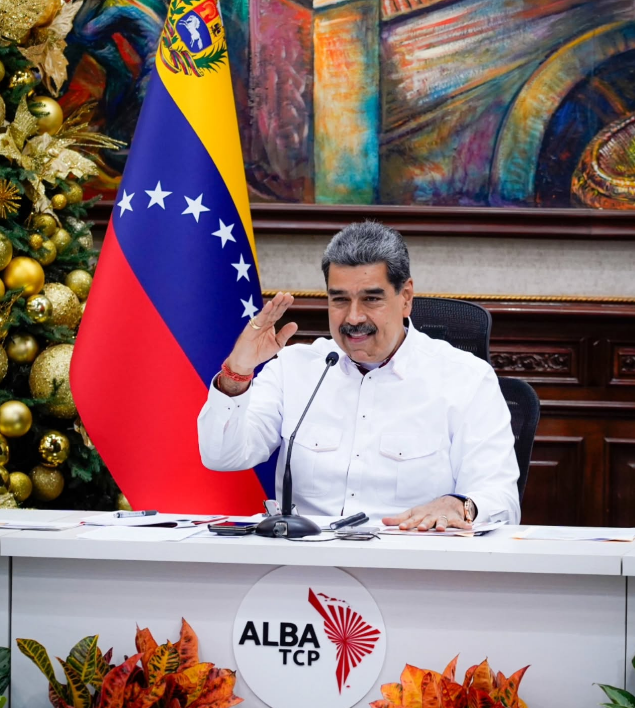
Around the beginning of January 2026, the globe arose with one of the most significant geopolitical events of the decade. News that reportedly came out of several international and diplomatic sources suggested that Venezuelan President Nicolás Maduro had been apprehended in one of the issues led by the U.S. and this shockwaved across Latin America, the global markets and the international diplomatic circles. This announcement, which was later reiterated by the former U.S. President, Donald Trump, immediately rekindled the discussion of sovereignty, international law, and the old power politics game of Venezuela. When the governments were scrambling to react and the legal community was questioning the legitimacy of the foreign military intervention on the sovereign territory, the name of Maduro took the center stage again not only as a leader of the sitting presidential administration, but as the embodiment of decades of political antagonism, sanctions, covert operations, and intellectual warfare. But this bombastic scene was not a case in point. It marked the end of over ten years of political instability, economic meltdown, diplomatic isolation and long-standing accusations which have accompanied Maduro during his tenure as president. To comprehend how Venezuela arrived at this historical landmark, one has to follow the path of a revolution, struggle, and unstopping international investigation that were the way of the union activist and now one of the most debated heads of the 21 st century to his current position.
Nicolas Maduro Moros can be called one of the most controversial political leaders of the 21 st century. Maduro was born into a working-class family as a bus driver and trade union activist and rose to the top of the office in Venezuela and was the heir to the Bolivarian Revolution following the demise of Hugo Chavez. His tenure that started in 2013 has been defined by extreme economic disintegration, international isolationism, mass migration, criminal charges of atrocities against humanity, and, ultimately, his theatric deposition in January 2026.
Maduro is a leader who represents to his advocates a fight against U.S. imperialism and defender of Venezuelan sovereignty. He embodies to the critics authoritarianism, electoral manipulation, and one of the worst humanitarian crises in Latin American modern history.
Childhood and Family Life.
Nicolas Maduro Moros was born on 23 November 1962 in the capital city of Caracas, Venezuela, in a family of the working class. He grew up in the small El Valle neighborhood in the west of the capital. His father, Nicolas Maduro Garcia was a famous leader of trade unions and a staunch leftist activist who belonged to the Movimiento Electoral del Pueblo (MEP). His mother Teresa de Jesus Moros was born in Cucaje, Colombia, an aspect that would later create endless controversy regarding the nationality of Maduro.
Maduro is the youngest out of four children, who was brought up by his father. Labor activism, Catholic traditions and left-wing political thinking played a vital role in his upbringing. Though brought up Catholic, Maduro later stated that his grandparents were Sephardic Jewish who had converted to Catholicism upon arriving in Venezuela.
Education and Political Awakening in Young Ages.
Maduro studied at Liceo Jose Avalos, a state high school in El Valle, where he was politically active in the student union first. Records indicate that he failed to even finish high school, something that most of his critics use to cast doubt over his readiness to become a leader.
Early in his adult life, Maduro was a bus driver in Caracas Metro system where he came to organize workers even though unions were formally banned. It was a critical time as far as his political identity was concerned. His working as a union organizer put him squarely in the left of the grassroots in Venezuela.
At the age of 24, he went to Cuba, where he received political training in the Escuela Nacional de Cuadros Julio Antonio Mella, which was a communist leadership school owned by the Cuban Communist Party. It was there that he was introduced to Marxist ideology, Cuban revolutionary doctrine and close associations with Cuban intelligence and Venezuela leftist movements – all of which would become hallmarks of his own political career.
Initiation into the Bolivarian Movement.
At the start of the 1990s, Maduro joined the MBR-200, the secret movement of Hugo Chavez. Maduro went on to become one of the most loyal civilian allies of Chavez after he failed to succeed in his coup in 1992 and he actively campaigned to release him.
Later on, Maduro significantly contributed to the establishment of the Movement of the Fifth Republic (MVR) that brought Chavez to power in the 1998 presidential elections. This was the start of the gradual ascendancy of Maduro to the Bolivarian Revolution.
Career and Rise to Power in Parliament.
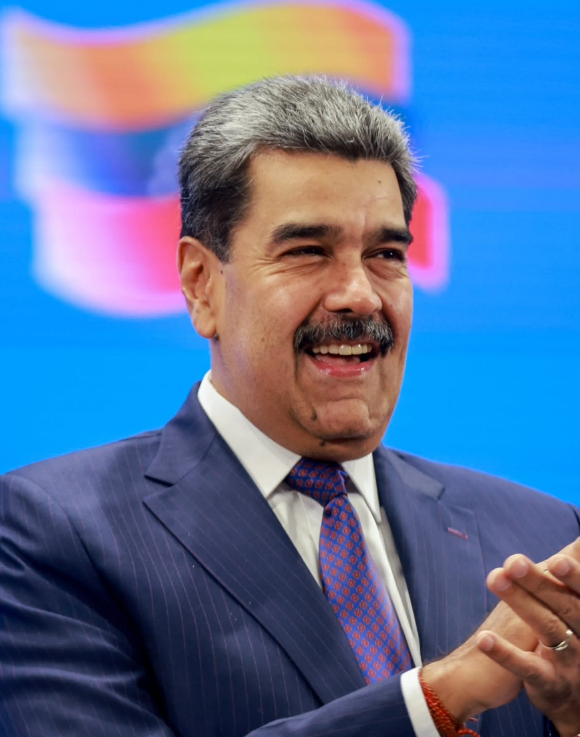
Maduro participated in the National Constituent Assembly (1999) and the National Assembly (2000) in the place of Caracas. His loyalty to Chavez and his negotiating skills in the party machinery gave him more and more power.
Between 2005 and 2006, Maduro held a senior government office of the National Assembly, a significant office, which propelled his national reputation to an even greater height. Soon after, Chavez made him his Minister of Foreign Affairs which he would serve a term of six years.
Foreign Minister: Diplomacy against U.S and International alliances.
When Maduro joined the government as foreign minister (20062012), he became one of the most visible personalities in the foreign policy of the anti-U.S. policy of Venezuela. He tightened his relationships with Cuba, Russia, China, Iran, Syria, and other regimes that are hostile to Washington and loosened or cut-off those that are allies of the U.S.
In this time, Venezuela:
• Cut ties with Israel
• Recognized Palestine
• backed up Muammar Gaddafi and Bashar al-Assad.
• Realized Abkhazia and South Ossetia.
• Greater liaison with Russia and China.
Nevertheless, Maduro despite his high-profile diplomacy was frequently criticized on his lack of fluency in foreign languages and his overdependence on ideological rhetoric as opposed to strategic diplomacy.
Chávez’s Chosen Successor
Maduro was made the Vice President of Venezuela in October 2012 by Hugo Chavez. Two months after, when Chavez was dying of cancer, he officially announced that Maduro was his favorite successor, which marginalized the influential figures such as Diosdado Cabello.
At the time of Chavez death on 5 March 2013, Maduro became the interim president, and it orchestrated a highly controversial election.
Presidency: Crisis Upon Crisis (2013-2026).
2013 Election and Early Rule
Maduro just won the 2013 presidential election by a slender margin of 1.5% beating off the opposition candidate Henrique Capriles. The opposition did not accept the results claiming fraud.
Since the very onset, the presidency of Maduro had been marred with troubles:
• Falling oil prices
• Hyperinflation
• Food and medicine shortages
• Rising crime and poverty
Governing by Decree
Having lost control of the National Assembly in 2015, Maduro was relying on:
• The Supreme Tribunal of Justice.
The National Electoral Council.
• The military
The opposition dominated legislature was stripped of power in the court, which resulted in a constitutional crisis and masses of protests in 2017.
Authoritarian Turn and International Isolation.
The government of Maduro retaliated against protests by repressing, which resulted in:
Thousands of so-called extrajudicial murders.
• Mass arrests
• Media censorship
• Shutting down of outlets that are independent.
Maduro called a Constituent Assembly in 2017, which was generally regarded as illegitimate. He was reelected in an election that has not been recognized by most of the international community in 2018.
In 2019, the opposition leader Juan Guaido claimed the position of an interim president with the support of more than 50 countries, including the United States.
Criminal Allegations and Human Rights.
Several global institutions have alleged that the government of Maduro committed:
• Crimes against humanity
• Torture
• Arbitrary detentions
• Suppression of free speech
In 2021, the International Criminal Court (ICC) initiated an investigation. In 2020, the U.S. prosecutors indicted Maduro on narcoterrorism charges claiming that he was working with drug cartels.
By the year 2025, the U.S. had given a 50 million bounty on his arrest and declared him a member of a foreign terrorist group.
Personal Life and Interests
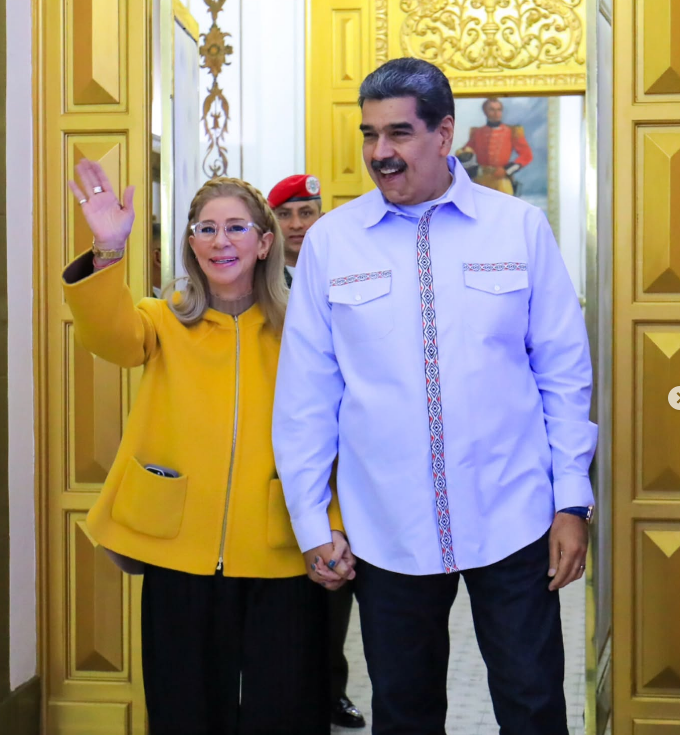
Maduro is a two-time divorced father with one biological child, Nicolas Maduro Guerra (also known as Nicolasito), who had served in a number of high government roles. He is also a father of three stepchildren of Cilia Flores who was previously married.
Astoundingly, Maduro himself has frequently talked of his admiration of John Lennon, Led Zeppelin, and the counterculture of the 1960s an ironic antithesis to his hard-line authoritarian government.
Covert Plot Allegations: The Editioned U.S. Effort to Seize Maduro.
In October 2025, the international news agencies, such as the Associated Press, announced a startling and scandalous claim: that the United States had secretly tried to recruit the personal pilot of the leader of the American antagonist, Nicolás Maduro, to help him get captured.
These reports claim that one U.S. Homeland Security agent, Edwin Lopez, invited General Bitner Villegas in the Dominican Republic and purportedly promised him money in case he would consent to get Maduro to fly to a place where he could be arrested by the U.S. authorities on charges of narco-terrorism.
During approximately 16 months, Lopez allegedly kept in encrypted communication with Villegas, yet in the end, Villegas did not collaborate with them, and in the open, stayed loyal to Maduro. The described plot was claimed to be based on a 2024 tip about alleged sanctions violations against the aircraft of Maduro. Following the operation failure, Venezuelan opposition supporters purportedly leaked the conversations between Lopez and Villegas, which briefly sparked serious speculation about what happened to the general afterwards before he resurfaced, denouncing his loyalty to Maduro.
These assertions, although much publicized, are still hotly debated and floated by different forces as either an instance of aggressive U.S. policy or rather as politically motivated accounts aimed at justifying internal oppression. Since the whole contents of this have not been cross-examined, these must be interpreted as alleged and geopolitical melodrama rather than being factual history.
Labeling as Foreign Terrorist Group and Ascending Tensions.
Officially declared a foreign terrorist organization by the U.S. government on 24 November 2025, Maduro and several Venezuelan officials the decision enhanced diplomatic enmity and further alienated Caracas in the eyes of western governments.
The implication of such designations is usually serious legal consequences, such as penalties, travel restrictions, and criminal responsibility to interact with designated people. The government of Maduro in turn condemned the designation as a political act and not legitimate, accusing the United States of imperialism.
Diplomatic Relations: Razing and Repairing of Diplomatic Ties.
Over the years, the foreign policy of Maduro has been a pendulum swing, and its developmental trajectory usually depends on the troubled relationship of Venezuela with the United States and the countries of the region:
On 6 March 2014, during the demonstrations against his government, Maduro cut the diplomatic and commercial ties with Panama, but later in the same July, the bilateral talks helped him reinstate them.
In August 2017, the U.S. President Donald Trump made it clear that he was not ruling out a military action against the government of Maduro, a declaration that condemned by Venezuelan officials as direct intervention.
After the United States officially recognized the opposition leader Juan Guaido as interim president on 23 January 2019, Venezuela officially severed diplomatic relations with the United States.
Re-occurring Diplomatic Crises.
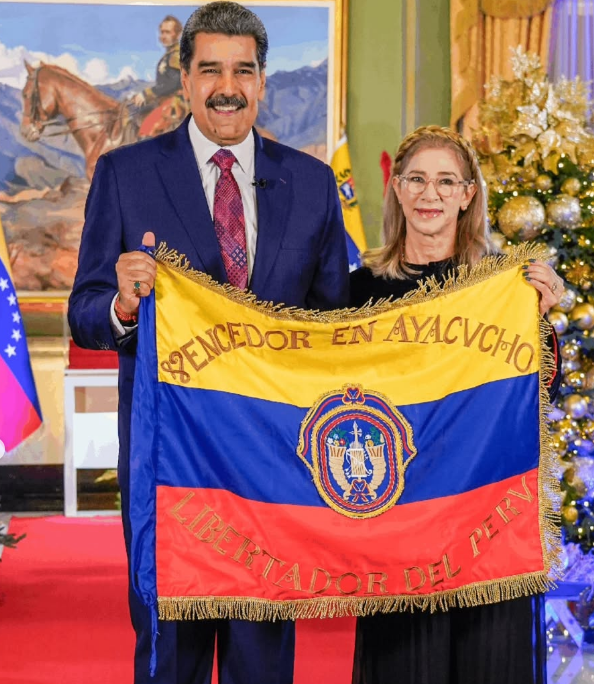
The relations on Venezuela with other countries were strained periodically:
In 2018, Panama sanctioned Maduro and his inner circle to deal with money laundering and financing of terrorism, which led to mutual Venezuelan sanctions. It was finally over as ambassadors were reinstated in April of the same year.
Following the action of Brazil in January 2019 to acknowledge Guaidó, Maduro gave Brazilian president Jair Bolsonaro a profane mention, which was widely condemned by the regional community.
Strategic Partnerships: Global South Diplomacy, Russia, and China.
Although Maduro continued to have conflict with Western states, he managed to sustain and build strategic relations in other places:
An established alliance with Russia, especially with President Vladimir Putin was enhanced to further collaborate with Russia upon the invasion of Ukraine in 2022, notably in the energy sector and the geopolitical arena.
• Maduro met with the heads of major powers like France (Emmanuel Macron) and the United States (John Kerry) at global events like the 2022 United Nations Climate Change Conference, where even the most hostile countries occasionally considered diplomacy.
State visits to Saudi Arabia (June 2023), China (September 2023) demonstrated that Maduro sought to diversify the foreign relationships of Venezuela and to have a chance to attract investment, including ideas of space cooperation and BRICS membership.
Regional and Global Problems: Palestine, Guyana, and Middle East Diplomacy.
Another aspect of the foreign policy of Maduro was great attitudes towards controversial international issues:
- He made Venezuela a strong supporter of the Palestinian cause, denouncing the activities of Israel in the Gaza Strip in November 2023 and accusing Israel of genocide, which has been both welcomed and criticized in international circles.
- Furthermore, Venezuela conducted in December 2023 a consultative referendum in support of its sovereignty over the contested Essequibo region a step further aggravating its relations with Guyana and contributing to a regional territorial crisis.
- In June 2025, Maduro denounced purported Israeli attacks on Iran, contextualizing it as a breach of international law and suggesting an apparent widespread Western complicity to the attacks a stance of unwavering conviction that put a strong emphasis on Venezuela leaning towards anti-Western geopolitical orientation.
Attacks on Assassination and Security Risk.
Presidency of Maduro has been marked by alleged attempts to kill him:
In August 2018, a very flashy event in Caracas that consisted of detonated drones was described by government officials as an assassination attempt. As the government of Maduro alleged political opponents, critics and independent analysts argued whether it was a false flag, or exaggerated.
In September 2024, the Venezuelan authorities said they had arrested foreigners, including Americans and Spaniards and one Czech victim, who were supposedly planning to kill Maduro. Top officials of the government blamed the U.S and the European intelligence services, but the accused countries strongly denied it.
Polarization History and the 2026 Takeover Scandal.
By the beginning of January 2026, Venezuela was transformed into one of the most divided countries in the world ideologically. At the same time, Maduro was both accused of authoritarianism by the whole world and praised by others because of his ability to oppose foreign pressure.
But the most dramatic incidence, nevertheless, occurred in January 2026, when the media released news about the American troops capturing Nicolas Maduro and his wife during military operations in Venezuela. The capture was announced by former U.S. President Donald Trump as one of the efforts to combat narco-terrorism and corruption.
The international community of legal experts also entered the fray by indicating that any foreign military action on the Venezuelan soil without the consent of the U.N. may possibly contravene Article 2(4) of the U.N. Charter, which was developed to limit the use of force against a foreign state other than in self-defense or with U.N. consent. The operation was however described as a necessity by U.S. officials against supposed criminal behavior and acts of terrorism financing.
In conclusion: A Presidency of Conflict.
The period of Nicolás Maduro as the president of Venezuela will probably be discussed in the future generations as an example of an acute geopolitical conflict, domestic crisis, and international scandals. Being either a radical champion of sovereignty or an authoritarian ruler of economical depression and institutional disintegration, there is no doubt that his rule changed the relations of Venezuela both domestically and internationally.
Alleged undercover actions to punitive measures, political realignment on one side and national standoff on the other side run through Maduro’s Venezuela that turned into a center-stage in 21 st century world politics and a paradigm of domestic ruling and international power relations.