
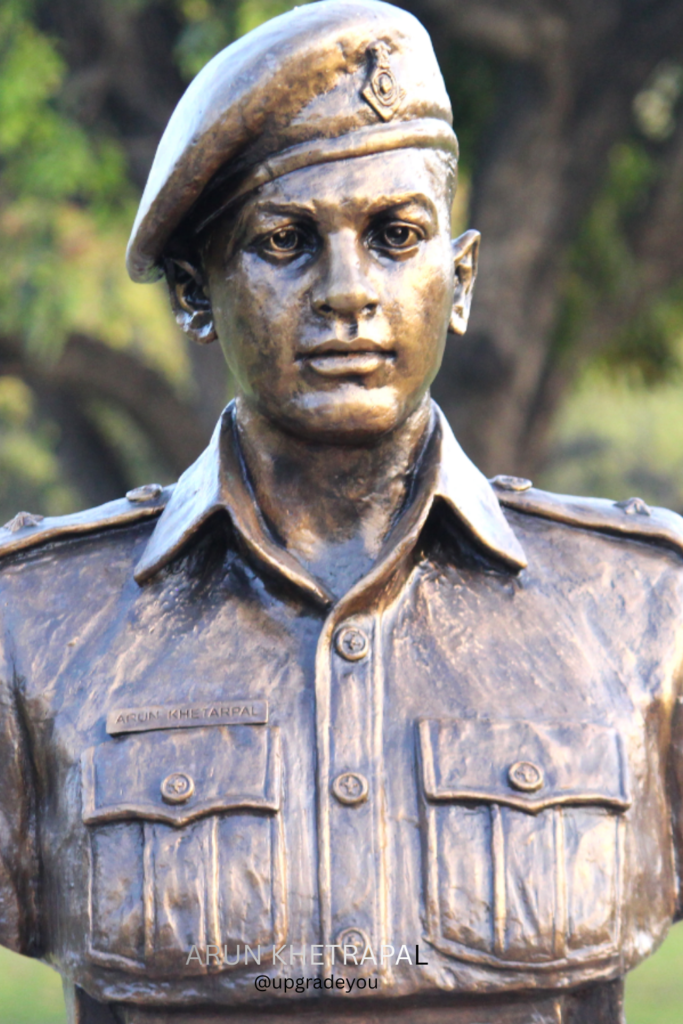
The thunder of tank engines, the chaos of a battlefield, and a young officer standing firm against impossible odds Ikkis does not unfold like a conventional war film. Ikkis is chock-full of emotional power drawn from actual history. Even as audiences are looking forward eagerly to its launch, one question naturally pops up: “Is Ikkis based on a true story?”
Indian films have predominantly relied on historical events as subject matters with the most exhilarating stories. Movies such as Border, Shershaah, and Uri transposed sacrifices made in Indian history from obscurity to collective remembrance. *Ikkis* is proud to be included in this list, as its inspiration lies in one of the most courageous instances in the Indian military’s past.
But at the center of this story is the name that is etched in the history of courage, Second Lieutenant Arun Khetarpal.
The Real Life Behind the Reel Story
Being the offspring of an Army serviceman, Arun Khetarpal was brought up in an environment ruled by discipline, responsibility, and an unshakeable commitment to the nation. Posted to the elite 17 Poona Horse regiment, he was only 21 when the call to the ultimate challenge came through.
Khetarpal was involved in the 1971 Indo-Pak War and was leading from the front during the keyBattle of Basantar. The enemy tanks were moving towards them aggressively, and the communication networks were down. It was getting even more difficult to survive on the ground. Survival was an option. Retreating was also an option.
Instead, Arun Khetarpal had other plans than mere survival.
He would not withdraw.
The next act was one of bravery that has been imparted to military school students to date. Fighting with unbridled determination, he destroyed a series of enemy tanks, securing a pivotal strategic victory for Indian forces. This was despite his own tank having been hit. He carried on with his mission till his last breath.For this supreme act of valour, Second Lieutenant Arun Khetarpal was posthumously awarded the Param Vir Chakra, becoming the youngest recipient of India’s highest wartime gallantry award.
How Ikkis Brings This Heroism to the Screen
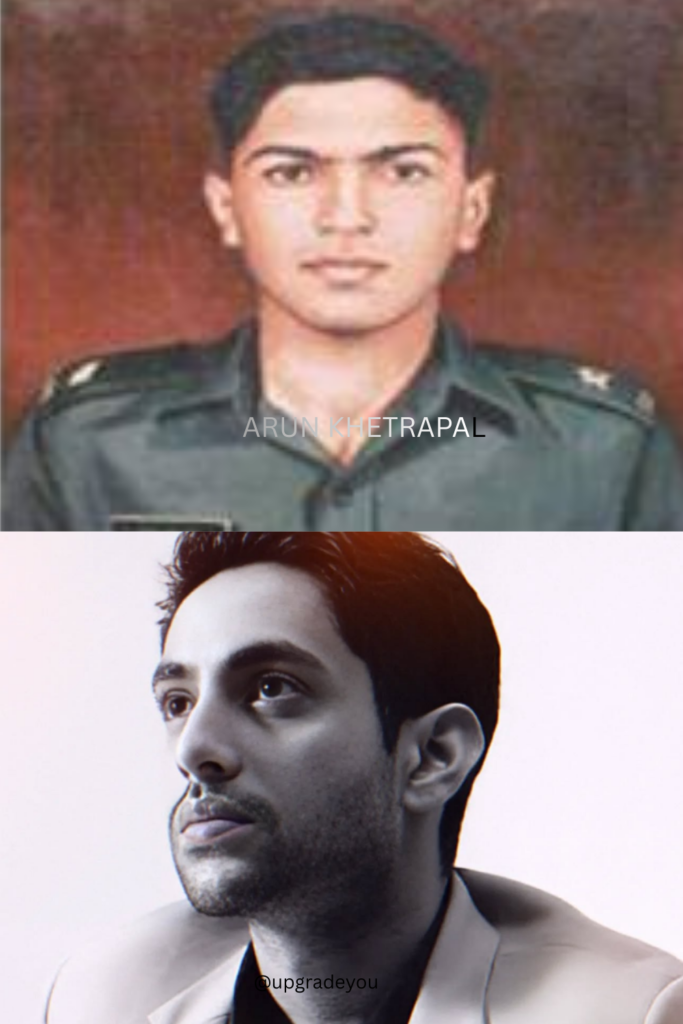
The movie Ikkis is directed by Sriram Raghavan. He is known for being very precise and good at creating tension. Sriram Raghavan also knows how to control his emotions. Ikkis talks about its subject in a way. It does not try to make a show. The film Ikkis is not, about glorifying war. Instead Ikkis focuses on what a young officer thinks when he is going to fight his battle, which will also be his last battle.
Agastya Nanda plays the role of Arun Khetarpal. He is not a soldier he is also a son and a leader. Agastya Nanda shows us a young man who has to deal with a lot of things in life very early on.
Dharmendra is an experienced actor and he brings a lot of feeling to the story. Dharmendra is, like a guide. He helps us understand what it means to leave a legacy and how war affects people for a long time even after it is over.
Ikkis does not try to make history seem exciting by talking about big heroes. Instead Ikkis lets the moments the scary parts, the times when people decide to be brave and the things people give up tell us just as much, about what really happened with Ikkis.
Arun Khetarpals story is still important to this day.
Ikkis is not a story about a war that happened in 1971. Ikkis is about people it is about what they believe in and it is about how much courage really costs. Arun Khetarpal was not a ranking officer with a lot of experience. Arun Khetarpal was an officer who had just started his job and he chose to do his duty even if it meant giving up his own life. Ikkis shows us what Ikkis is really about which is the bravery of people, like Arun Khetarpal.
We live in a time when people often think being a hero is really cool.. Ikkis shows us that being really brave is actually pretty quiet and simple. It is about making choices and sometimes you have to pay a big price for them. Ikkis reminds us that real bravery is not loud it is quiet. It is decisive and the people who are really brave, like Ikkis often have to pay for it in full.
Is Ikkis based on a real story?
Yes — Ikkis is firmly rooted in reality.
The movie is based on the life of Second Lieutenant Arun Khetarpal and what he gave up for his country. Second Lieutenant Arun Khetarpal did some brave things during the Battle of Basantar and these are still remembered as great moments for the Indian Army. The people who made the movie Ikkis may have changed some things to make the story more exciting. The main idea of Ikkis is still very true, to what really happened in history. The story of Second Lieutenant Arun Khetarpal and the movie Ikkis are connected to events.
Ikkis is not just a war film.
It is a tribute to courage that did not ask for time — and a reminder that some heroes live forever, not by how long they lived, but by what they stood for.
Second Lieutenant Arun Khetarpal, PVC (1950–1971)
Second Lieutenant Arun Khetarpal was a brave man. He was born on 14 October 1950. Died on 16 December 1971. Second Lieutenant Arun Khetarpal was an officer in the Indian Army. He commanded tanks for the 17 Poona Horse. People think that Second Lieutenant Arun Khetarpal was the tank commander, in the Indian Army. He destroyed enemy tanks during the 1971 Indo Pakistan War. In fact Second Lieutenant Arun Khetarpal is credited with destroying 10 enemy tanks.
The Param Vir Chakra is a big deal in India. It is the honour that India gives to people who show a lot of courage during a war. This person was given the Param Vir Chakra after he died. He got it because he was very brave, during the Battle of Basantar. The Battle of Basantar was a fight. He died during this fight when he was 21 years old. The Param Vir Chakra is something that the Param Vir Chakra recipient and his family can be very proud of. This person showed courage and that is why he got the Param Vir Chakra.
Early Life and Family Background
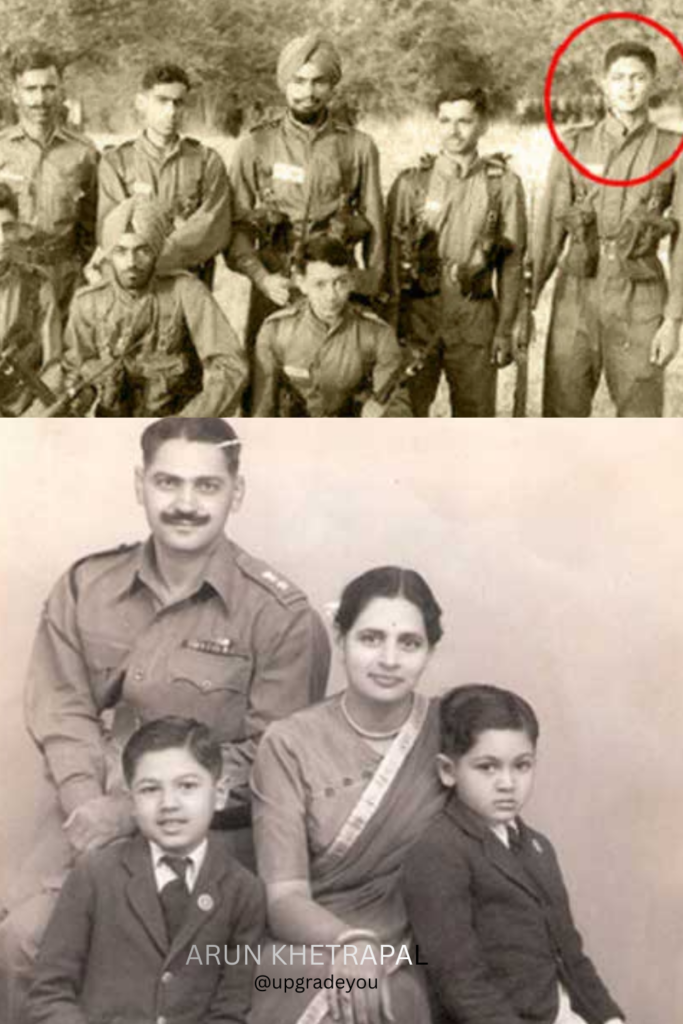
Arun Khetarpal was born on 14 October 1950 in Pune, Maharashtra. He came from a Punjabi Hindu Khatri family. This family had a lot of people in the military. Arun Khetarpals family was from Sargodha, in Punjab. They had to leave their home and move to India. This happened when India was divided. They had to come as refugees.
His father, Lt Col M. L. Khetarpal was in the Indian Army. He was in the Corps of Engineers. The Indian Army was a part of his family. His grandfather was in World War I. The Indian Army was something his family was familiar with. His great grandfather was in the Sikh Khalsa Army. The Indian Army and the Sikh Khalsa Army were both important to his family. His father, Lt Col M. L. Khetarpal later became a Brigadier, in the Indian Army.
Khetarpal went to school at St. Columba’s School in Delhi and The Lawrence School in Sanawar. He was very good at his studies. He was also very good at sports. Khetarpal was a school prefect which shows that he had leadership qualities. These leadership qualities were very important, in Khetarpals life which was short but very special.
Military Training and Commission
In June 1967 Arun Khetarpal joined the National Defence Academy. He was part of Foxtrot Squadron. Arun Khetarpal was the leader of his group, at the National Defence Academy. He was the Squadron Cadet Captain of the Course. Arun Khetarpal led the National Defence Academy Foxtrot Squadron to win a competition. The National Defence Academy number of Arun Khetarpal was 7498/F/38.
He later went to the Indian Military Academy. This is where he got a special honor. He was allowed to carry the Presidents Colours during his term, at the Indian Military Academy. This is a big deal and it means he did a great job at the Indian Military Academy. The Presidents Colours is given to students who do well at the Indian Military Academy.
On the 13th of June 1971 Arun Khetarpal joined the 17 Poona Horse. The 17 Poona Horse is one of the Indian Armys decorated armoured regiments. Arun Khetarpal was commissioned into the 17 Poona Horse on this day.
The 1971 Indo Pakistan War
The Indo Pakistan War of 1971 was a deal. The 17 Poona Horse did a job. They worked with the Infantry Brigade in the Shakargarh sector. The 17 Poona Horse was very important, in the Battle of Basantar. They really helped turn things around in the Battle of Basantar. The Indo Pakistan War of 1971 saw the 17 Poona Horse do some things.
The brigade had a goal, which was to get a foothold on the other side of the River Basantar. They were able to do this by the night of 15 December. But there were a lot of mines in the way so the Indian tanks could not move forward. While the engineers were trying to remove the mines they got word that the Pakistani tanks were moving in with a lot of force. This was a bad situation, for the River Basantar bridgehead. The River Basantar was still a problem.
The Poona Horse went ahead even though it was very dangerous. They had to go through a field with lots of mines, in it.. The Poona Horse made it through and met up with the infantry by the time the sun came up on 16 December 1971.
Battle of Basantar: The Defining Stand
At 08:00 hours on 16 December the Pakistan armys 13th Lancers with their US made Patton tanks started to fight back with Patton tanks at Jharpal. They did this times under a smokescreen cover. The situation was getting tough so they asked for more soldiers to come and help the Pakistan armys 13th Lancers, with their US made Patton tanks.
Second Lieutenant Arun Khetarpal was close by with the A Squadron. He reacted fast. Second Lieutenant Arun Khetarpal went into the battle. Took charge. He showed the way to the tanks. The Indian tanks fought back the attack from Pakistan very well. They were very good, at using their guns and Second Lieutenant Arun Khetarpal was very calm and a good leader.
As the battle intensified, enemy armour regrouped and launched further attacks. One by one, Indian tanks were hit. When his fellow troop commander was killed, Khetarpal continued alone, pressing forward with relentless determination.
In the ensuing fierce engagement, Arun Khetarpal destroyed ten Pakistani Patton tanks, blunting a critical breakthrough attempt. Even after his own tank, Centurion ‘Famagusta’, was hit and set ablaze, he refused to withdraw.
When ordered over the radio to abandon his tank, he replied:
“No, Sir. I will not abandon my tank. My main gun is still working, and I will get these bastards.”
Moments later, after destroying yet another enemy tank at close range, his tank was hit again. Second Lieutenant Arun Khetarpal succumbed to his wounds, but his actions decisively denied the enemy a breakthrough.
Unsung Crew and Supporting Soldiers
The defence reports and stories, from veterans show that Sowar Prayag Singh, Sowar Nand Singh and Sowar Nathu Singh of Hodson’s Horse were very important. They worked together with Khetarpal’s troop during the parts of the battle. Sowar Prayag Singh, Sowar Nand Singh and Sowar Nathu Singh of Hodson’s Horse did a job. They helped a lot during the battle. The defence reports say that Sowar Prayag Singh, Sowar Nand Singh and Sowar Nathu Singh of Hodson’s Horse were heroes.
These soldiers did a job of telling people what was happening on the battlefield at that very moment. They made sure everyone was working together to return fire even when they were being heavily bombed. The soldiers held their ground until their tanks were completely destroyed. Even though they are not really mentioned in reports, other people who were there say that these soldiers were heroes who did not get the credit they deserved. The efforts of these soldiers helped a lot to make the bridgehead a safer place.
Death and Aftermath
Khetarpals tank this is the Famagusta tank was captured by forces and they also found Khetarpals body.The Pakistani forces eventually gave back the Famagusta tank and Khetarpals body to India.Now the Famagusta tank is at the Armoured Corps Centre and School, in Ahmednagar where it is being taken care of.
Arun Khetarpal was cremated on 17 December 1971 near Samba. His family got to know about Arun Khetarpals death on 26 December. They received Arun Khetarpals ashes, which were sent to them after the cremation.
Param Vir Chakra Citation
Second Lieutenant Arun Khetarpal showed a lot of bravery and leadership. He also made the supreme sacrifice. Because of this Second Lieutenant Arun Khetarpal was given the Param Vir Chakra after he died.
The official citation says that Second Lieutenant Arun Khetarpal did something courageous. It was a sacrifice that Second Lieutenant Arun Khetarpal made and it was not something that he had to do.
Legacy and Remembrance
Arun Khetarpals legacy is really important to the Indian Army. The Indian Army remembers Arun Khetarpal at the National War Memorial and the Balidan Stambh in Jammu. They also remember Arun Khetarpal at the Khetarpal Ground at the National Defence Academy and at some buildings, at the Indian Military Academy. Arun Khetarpal is a part of the Indian Army.
Recognition from the Opposing Side
Arun Khetarpals legacy is really special because the Pakistani Army officers said he was very brave. This is unusual because in stories about war the other side does not say nice things, about their enemies. Arun Khetarpals courage is what makes his legacy so exceptional. The fact that the Pakistani Army officers noticed Arun Khetarpals bravery is a deal.
The Pakistani military historian, Major A. H. Amin, who used to be an officer in the corps said that the only time the Pakistani army could have broken through the Indian army lines during the Battle of Basantar was stopped by 2nd Lieutenant Arun Khetarpal of the Poona Horse. Major A. H. Amin looked at this from the side from the Pakistani armys point of view and he said that 2nd Lieutenant Arun Khetarpals actions had a big impact, on what happened on the battlefield. The Battle of Basantar and the armys plans were affected by 2nd Lieutenant Arun Khetarpals bravery.
More proof came years later, from Brigadier Khwaja Mohammad Naser of Pakistans 13 Lancers. He was actually there when it happened. In 2001 Brigadier Naser met with Brigadier M. L. Khetarpal, who’s Arun Khetarpals father. During this meeting Brigadier Naser talked openly about the fight. He said Arun Khetarpal was an officer who drove his tank with bravery. Arun Khetarpal kept fighting even when things were really tough and his tank was badly damaged. Brigadier Naser thought Arun Khetarpal was very courageous.
Brigadier Naser said that Pakistan lost a lot of tanks and Khetarpals brave fight was very important in stopping them from moving. He made it clear that when they were fighting both men were just doing their job for their countries. Brigadier Naser also said that there is no need to blame or forgive anyone. We can only respect an enemy, like Khetarpal. He showed respect for Khetarpal because he was a courageous opponent.
Brigadier Naser later talked about Arun Khetarpal. He said Arun Khetarpal was like a rock that the other side could not move. This was during the fight back on 16 December 1971. The other side saying this about Arun Khetarpal shows that what he did was very brave and important, for the battle. Arun Khetarpals actions were brave. They changed the outcome of the fight.
The fact that other countries acknowledge Arun Khetarpal is a big deal. It shows that Arun Khetarpal is a hero in the eyes of people. This acknowledgement of Arun Khetarpal is very important because it proves that being brave is what truly matters. People remember Arun Khetarpal for his bravery, not the country he came from or the uniform he wore. Arun Khetarpals bravery is recognised by everyone no matter where they are from or what side they were on, in a conflict.
Arun Khetarpals life is really inspiring. It has been shown in television, literature and cinema. You can see his story in the Param Vir Chakra TV series. There are also novels about Arun Khetarpal, by Amar Chitra Katha and Roli Books. Now Arun Khetarpals courage is being shown again in a film called Ikkis by Sriram Raghavan. In this film Agastya Nanda plays the role of the Arun Khetarpal officer who became famous at a very young age of 21. Arun Khetarpals story is very inspiring. It continues to motivate people.
Why His Story Endures
Second Lieutenant Arun Khetarpal was 21 years old but the brave things he did are still remembered by people today. The movie Ikkiss not just about a fight it is about an idea. That when you do your duty without being scared it can make a young man, like Second Lieutenant Arun Khetarpal into a hero that people talk about for a long time.
Some heroes really do live forever. They stay in our minds and hearts for a long time. The heroes I am talking about are the ones who do things and people remember them for it. These heroes live forever.
Not by the length of their lives — but by the values they stood for.