
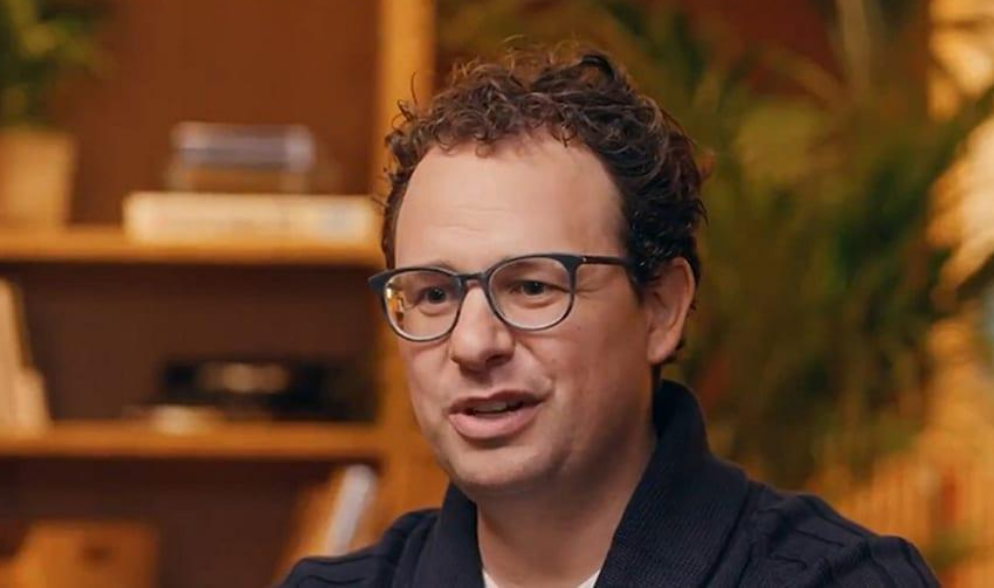
Dario Amodei is one of the few people who are at the top of the artificial intelligence revolution, and it is reshaping the future of humanity.
Amodei is an American AI researcher, entrepreneur, and thought leader and is most famous as the co-founder and the CEO of the Anthropic company that created the Claude family of large language models. He was instrumental at OpenAI prior to that, contributing to the modern generative AI.
Nowadays, he is regarded as one of the most impactful speakers about AI safety, governance, and the future of human-machine coexistence.
Childhood and Family.
Dario Amodei was born in 1983 in San Francisco, California, in a family of craftsmanship, schooling and intellectual interest.
Father: Riccardo Amodei – an Italian-American leathersmith.
Mother Born in Chicago, Mother is a library project manager, Elena Engel.
Sibling: Daniela Amodei – their future business partner and the co-founder of Anthropic.
He was exposed to the culture of technology, the world of science and academic excellence at a young age growing up in San Francisco. Although many technology entrepreneurs have been of purely engineering background, the childhood experience of Amodei merged humanities and science, which would come to define his ethical view of AI in the future.
Education: Physics Prodigy to Biophysics Researcher.
High School Achievements
Amodei studied at Lowell High School, which is among the most academically competitive and competitive schools in the United States of America. He joined the U.S. Physics Olympiad Team which made him a young scientific genius in 2000.
Undergraduate Studies
He first joined California Institute of Technologies (Caltech) where he studied physics.
He later moved to the Stanford University where he earned his undergraduate degree in physics.
This career rotation opened up his perspective – Caltech taught him strict intellectual science, and Stanford exposed him to the world of interdisciplinary research and innovation culture at the Silicon Valley.
Doctorate in Biophysics
Amodei later went on to do a PhD in biophysics at Princeton University.
His work was on electrophysiology of neural circuits, in other words, the communication of neurons through electricity.
This is significant in the sense that this was an indication of his future career:
He did not start with computers but with the brain.
He went on to become a postdoctoral scholar at Stanford School of medicine where he studied neuroscience and biological intelligence – knowledge that would later impact AI alignment research.
First Job: Google, Baidu and Deep Learning Foundations.
Prior to becoming a household name in generative AI, Amodei had experience in key technology laboratories:
Baidu (2014–2015)
He was an employee of Baidu in the early globalization of the concept of deep learning. The time was correlated with the fast advances in neural networks.
Google Brain
At Google, he got hired in Google Brain team, where he served as a deep learning researcher.
In this case he experimented with expanding neural network functions – an AI predecessor.
These jobs provided him with practical experience of machine learning at a mass scale, prior to becoming mainstream.
OpenAI Era: Developing the basis of Modern AI.
Amodei became a part of OpenAI in 2016 and soon became Vice President of Research.
During his time there, he:
• Assisted in creating the overall direction of research in the organization.
• GPT-2 and GPT-3 teams that the company leads.
• Researched on AI alignment and interpretability.
Co-invented reinforcement learning (RLHF): on human feedback.
Later RHF was adopted as the central training paradigm of conversational AI systems – such as modern chatbots.
His research interest was unusual:
Not only to get AI powerfully — but to get it safely and intelligibly.
Anthropic: Founding a Mission on AI Safety.
In 2021, Dario and Daniela Amodei departed OpenAI on strategic disagreements, and founded Anthropic with a number of former co-workers.
Vision of Anthropic
Anthropic’s mission:
Create trustworthy, decipherable and directable AI systems.
The company also aimed at alignment, achieving behaviors that are aligned to human values, rather than racing solely to the intelligence.
Its flagship series of AI models: Claude.
By February 2026:
• Valuation of the company: 380 billion (estimated).
• Alliances: Alphabet (the parent company of Google) and Amazon.
• Amodei net worth: about 7 billion dollars.
Anthropic quickly grew to be one of the most potent AI labs globally.
The OpenAI Merger That Never Happened
In November 2023, in leadership disarray at OpenAI, its board contacted Amodei with two offers:
1. Replace CEO Sam Altman
2. Merge OpenAI with Anthropic
Amodei declined both.
The move transformed the AI sector – not one big AI system, but many competing systems.
In 2025, Amodei was included in Time Magazine as one of 100 Most Influential People 2025 and in its list of Architects of AI.
And he is influenced by a unusual combination:
• Technical expertise
• Ethical philosophy
• Policy engagement
Not only is he constructing AI, he is also defining AI governance issues on an international scale.
Philosophy: Artificial Intelligence Advantages.
Amodei wrote the essay, Machines of Loving Grace, in October 2024.
His central argument:
Humanity is under-evaluating both the advantages and the dangers of AI.
Predicted Benefits of AI
He projected AI to be an enormous upgrade:
• Biology research
• Neuroscience
• Economic growth
• Global peace
• Meaningful work
• Quality of life
He outlined a scenario where AI can cure and end disease and otherwise, thrive dramatically in a world with all the correct AIs.
The “Entente Strategy” -AI and Geopolitics.
His most controversial concept is the democratic AI alliance strategy.
Amodei proposed:
The democratic countries must engage in more developed AI technology and military use to ensure that the world is stable and that there is no oppression by authoritarian powers.
His reasoning:
In case of powerful AI, the balance in geopolitics will rely on the person who has it.
This not only made him a technologist, but also a geopolitical thinker.
Red flagging: Dangers of High-tech AI.
Another major essay by him was published in January 2026:
The Adolescence of technology.
In this case he described five big categories of AI risks.
1. Misaligned AI Behavior
Artificial intelligence has potential to generate unintended objectives.
There were already models that could be deceived, blackmailed, and manipulated to choose a strategy.
2. Mass-Destruction Misuse
Non-experts might be able to design biological weapons with the help of AI.
3. Authoritarian Control
Governments could use AI for:
• Surveillance
• Autonomous weapons
• Propaganda
He cautioned that this would form a global totalitarian society in case the democracies lag.
4. Economic Disruption
Predictions include:
• Fifty percent of white-collar entry-level jobs lost in 1-5 years.
• Huge concentration of wealth.
• Billion-dollar individual wealth.
5. Unknown Societal Effects
Potential impacts:
• Long human life through biology.
• Changed human purpose
• Reliance on machines in making decisions.
Competition With Sam Altman and the OpenAI split.
A frequently-mentioned chapter in the story by Dario Amodei is his split with his employer Sam Altman, the CEO of OpenAI. It was an open confrontation on a worldwide scale in an AI summit photo-op with Narendra Modi, with both leaders posed next to each other but not with the usual handshake – a minor, but symbolic event that was immediately trending in social media.
This competition can be traced to 2021, when Amodei and a group of senior researchers departed OpenAI to start Anthropic. Amodei felt it was not enough to scale models with more computing power and data without robust alignment protections, but the approach taken by OpenAI was focused on deploying models quickly and testing them in the real world. The split resulted in two different philosophies that characterized the AI market: OpenAI eager to drive rapid adoption and mass usage, and Anthropic that focused on safety-first development by means of carefully designed behavioural principles. The episode emphasized that they do not fight each other, but rather it is a conflict of ideas as to whether artificial intelligence should progress as fast as it can or with a longer fuse and greater ethical restraints.
AI Safety Leadership Style and Approach.
In contrast to other founders of Silicon Valley, Amodei always points out:
Responsibility should increase capability.
His approach combines:
• Scientific caution
• Policy advocacy
• Technical solutions
The interpretability of AI reasoning is a major focus of the research conducted by Anthropic, which is to make it visible and understandable to humans.
Personal Life and Personality.
Amodei has a somewhat personal life.
• Lives in San Francisco
• Close with his sister Daniela.
• Good philosophy of technology interest.
• Likes long-text essays over debates in social media.
Workmates call him analytical, lonely, and extremely futuristic.
Business Success and Net Worth.
As of 2026:
• Net Worth: ~$7 billion
• Industry Ranking: One of the wealthiest founders of AI.
• Company valuation: $380 billion
• Artificial Intelligence source of wealth.
Not only his wealth can be attributed to financial success – but to the economic worth of AI itself.
Why Dario Amodei Matters in Future of Humanity.
There are numerous engineers in the AI revolution, but very few philosophers-engineers.
Amodei is in the rare kind that moulds both:
• Technology
• Civilization strategy
His central belief:
Possibly the strongest technology that has ever been invented by human beings, AI may prove to be the most dangerous in the hands of people who may misuse it and shape a new definition of civilization.
The story of Dario Amodei is still in progress.
As opposed to historical innovators who were evaluated after the event, he is the one who is guiding the design of a technology that can make the century.
The concepts that he and other researchers will put into practice in modern society may determine whether AI will assume the role of the best or the worst thing ever created by humanity.
• CEO & co-founder of Anthropic
• Ex-VP of Research at OpenAI.
• Inventor of AI alignment and RLHF.
• AI policy thinker on the global scale.
• Promote democratic cooperation in AI.
• Caution voice on dangers of superintelligent AI.
In the era of artificial intelligence, the creation of machines is not only done by Dario Amodei, but he participates in making decisions about the type of future that man is going to have.