
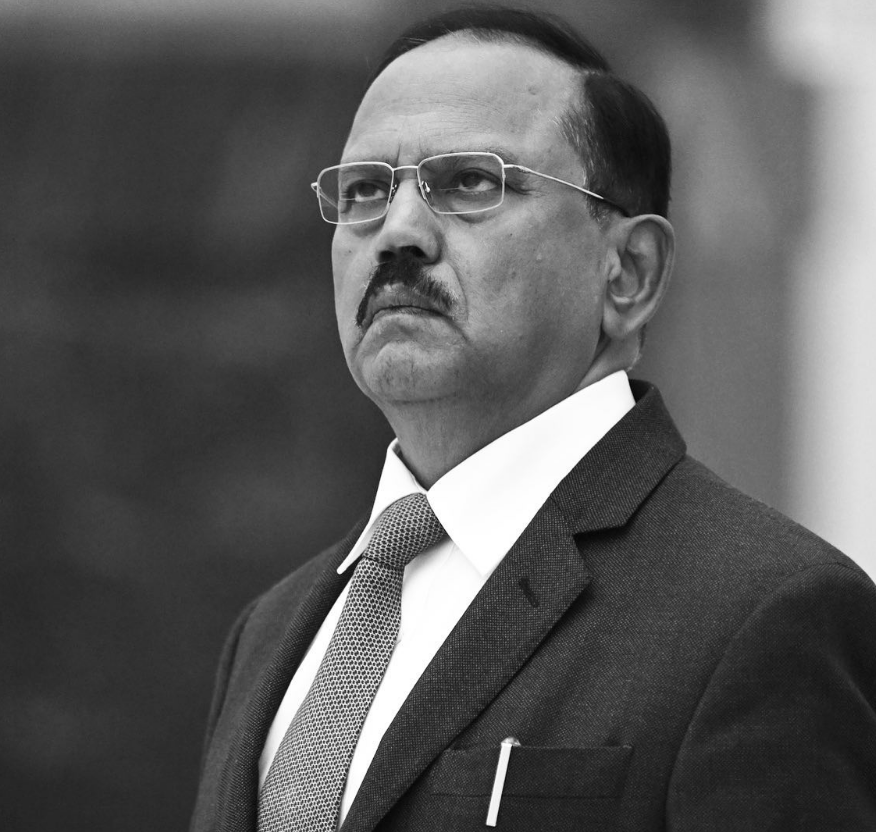
Ajit Kumar Doval is not a leader who wants to get applause, popularity and attention of people. However, there have been few figures in independent India that have had as immense an impact on the national security of the country like he. Being called the astute strategist of India and even likened to a fictional character in an intelligence thriller, Doval has led a secretive life since he was shielded behind closed files, undercover operations, and dangerous missions, a failure in which he could lose his life. Whether it be the process of negotiating peace in insurgency-infested areas, infiltrating enemy-controlled areas, developing counter-terror principles, or being a center-stage in the most decisive Indian security measures, it is a story of the mind, the heart, patience and total devotion of Ajit Doval to the nation.
Upbringing, Discipline, Service and Strategy.
Ajit Kumar Doval had been born on 20 January 1945 in Pauri Garhwal, Uttarakhand, in British India. He was born into a family that has good origins in the public service. His father, Major G.N. Doval was an Indian Army officer and his fatherly life had taught him the values of military discipline, constant transfers and early realization of duty and sacrifice. His mother was a cousin of Hemwati Nandan Bahuguna, who served as Chief Minister of Uttar Pradesh, which has influenced Doval, albeit indirectly, to the operations of government and politics. Nevertheless, his childhood was intact, plain, and strict. Doval later attended several schools due to the changing positions of his father in the army, but graduated at the Indian Military Boarding School in Ajmer, Rajasthan. The school helped in refining his leadership skills, physical stamina and psychological strength. He received a Master degree in Economics in the year 1967 at Agra University. The next year, aged only 22, Ajit Doval entered theUPSC Civil Services Examination and not only passed it in his very first attempt but did so with a distinction that made him an outstanding officer right away. Later in 1968, he entered the Indian Police Service (IPS) and assigned to the Kerala cadres.
Kerala Riots: A Young Officer First Test.
Ajit Doval was made Assistant Superintendent of Police (ASP) shortly after he had completed his training, in Kottayam, Kerala. He had developed his reputation at an early age in a crisis that most senior officers were hesitant to deal with. On 28 December 1971, an incident that happened at a small scale at the Noor Jahan Hotel in Thalassery (Kannur district) resulted in serious communal riots. Looting in shops, burning their property, and violence increased exponentially. The conflict had escalated to a point where even the police were afraid to go into the vicinity. Political pressures were heavy and then Home Minister K. Karunakaran wanted an officer who was courageous enough to bring sanity. Senior officials suggested a new posted but well qualified Ajit Doval. Doval went into the riot troubled locality on 2 January 1972 himself. He employed no force of brute power but instead employed strategic intelligence searching namely going to the localities, talking directly to local people, locating the organizers of riots, and learning the actual reason behind the anger. He used selective deployment of the police forces, only key instigators were arrested, he negotiated directly with the leaders of communities, restored looted property, and returned it. In less than seven days riots that had taken over the region paused without further bloodshed. An official report by a senior officer Alexander Jacob highly complimented Doval in his approach. His achievements got into the ears of Delhi and in a few months, he was also posted in the Intelligence Bureau (IB) which was his first step towards the intelligence world.
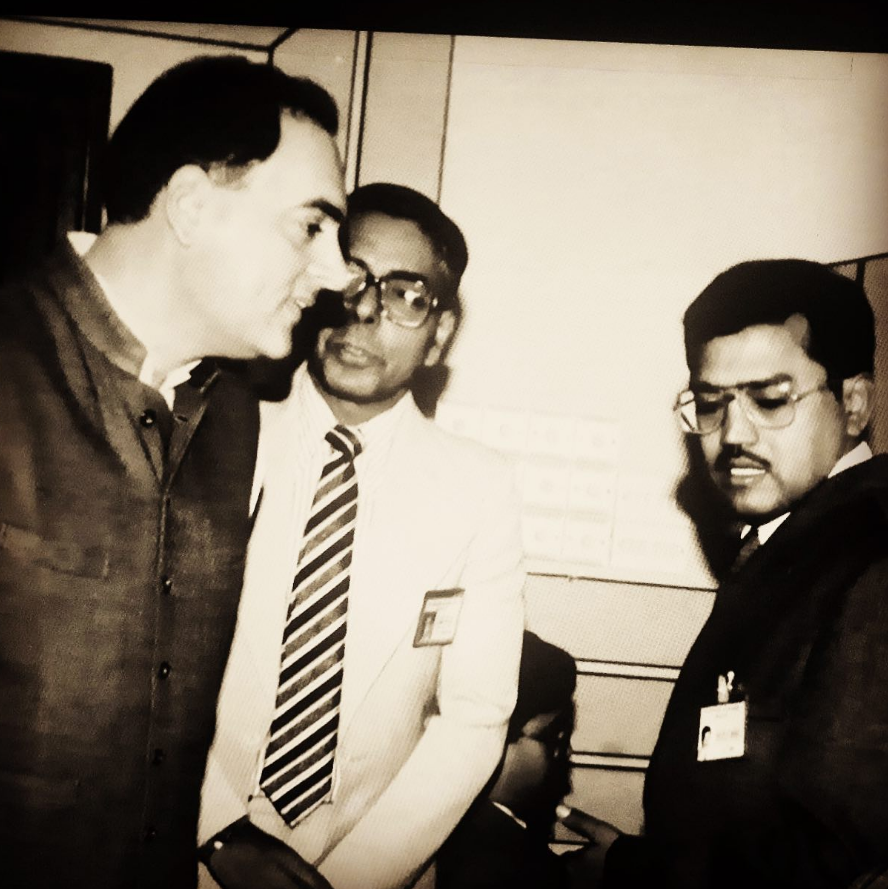
Intelligence Bureau: Walking into the Shadow World.
Ajit Doval entered the IB in mid 1972 in the Direct Operations Wing. He got married the same year and had two sons called Vivek Doval and Shaurya Doval, but his family life was an avid secret and never bothered even with the dangerous professional missions. This was the turning point of Doval career towards the covert operations, managing insurgency and strategic intelligence.
Mizoram: Warless ending of an Insurgency. Perhaps the most successful and one of the first intelligence actions of Ajit Doval was in Mizoram which was under Assam and a violent insurgency led by Laldenga and Mizo national front (MNF). There had been resentment through economic neglect, drought, discrimination along language lines and the sacking of Assam Rifles battalions which were mainly staffed by Mizo personnel. The armed uprising escalated to the extent that the MNF fighters attacked the Indian forces, replaced the Indian flag and proclaimed Mizoram a sovereign nation. The greatest difficulty to the Indian government was that domestic backing strongly supported MNF, so the military intervention posed dangerous and counterproductive. Ajit Doval was deployed as the head of Subsidiary Intelligence Bureau (SIB) in Mizoram. In a matter of days, he found the major flaw, there were seven strong commanders of MNF, working out of Myanmar, who were not in full agreement with Laldenga. Pretending to be a field operative, Doval infiltrated the Myanmar hills and lived there among the commanders and even invited them to his residence after drinking together. His wife, who did not know who they were, prepared food to men who were assigned to be militants officially. Doval spend six out of seven years between 1972 and 1974 urging the commanders to quit armed struggle and support India. Having lost the support, Laldenga could only negotiate. The outcome was historic: Mizoram was made an independent Indian state. Laldenga took over as Chief Minister. • Dialogue was used to bring to an end one of the most violent insurgencies in India. Laldenga subsequently admitted in the open that it was the strategy of Ajit Doval that compelled him to peace.
Sikkim: Strategy Over Force Shortly after Mizoram,
Doval took a central role in incorporating the state of Sikkim into India. Sikkim was a princely state and then run by Chogyal Palden Thondup Namgyal whose marriage to American socialite Hope Cooke was the subject of Cold War geopolitical anxieties at the time. Doval had been secretly reinforcing democratic forces in Sikkim under the tutelage of the RAW chief R.N. Kao. He sponsored new political figures such as Kazi Lhendup Dorjee, rallied people and undermined monarchical power without confronting it. This was followed by a referendum in which more than 97 percent of Sikhs population voted to be united with India. On 16 May 1975, Sikkim was declared a 22 nd state of India. Because of his outstanding work in Mizoram and Sikkim, Ajit Doval was awarded the Presidential Police Medal at a very young age.
Pakistan: Deep-Cover Espionage.
Ajit Doval later served between six and seven years in Pakistan, being stationed as First Secretary in the Indian High Commission, although unofficially working undercover. He would collect information about the nuclear program in Pakistan, terrorist cells and military operations, all in the name of a beggar or a local civilian. He just avoided being caught on a number of occasions. The discovery would have been immediate death. However, he still kept on transmitting some critical intelligence to India, and he contributed to the countering of the nuclear ambitions of Pakistan and the proxy warfare.
Operation Black Thunder: Bullets versus Intelligence.
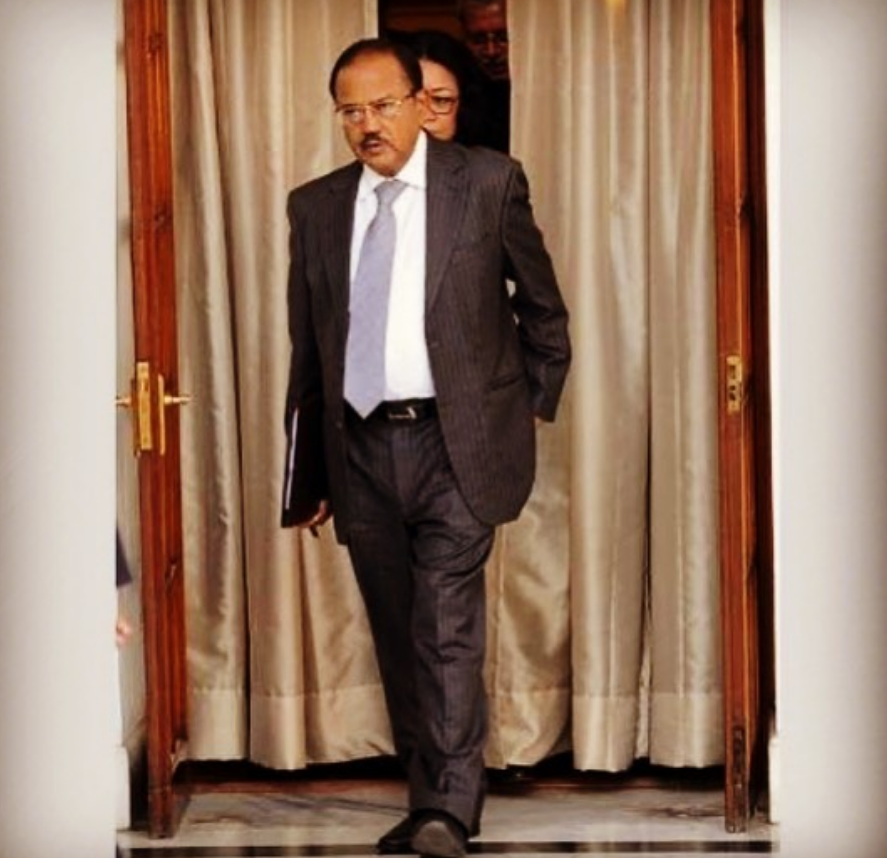
In 1988 the militants returned to the Golden Temple. The government, which had been traumatized by Operation Blue Star, desired zero bloodshed. Ajit Doval in disguise as a rickshaw puller entered the temple posing as an ISI agent and after gaining the trust of the militants, cut off their water and power supply and gradually eroded their spirits by using a mix of psychological pressure. On 18 May 1988 militants gave up without a shot being fired inside the shrine, a record accomplishment in counter-terror policy.
IC-814 Hijacking & Later Years
Ajit Doval was instrumental in advising matters, especially in coordination of intelligence, during an IC-814 hijacking in Kandahar in 1999. Although the episode was controversial, it strengthened his position that counter-terrorism needed a long-term strategic changes, rather than reactive measures. He later took up the directorship of the Intelligence Bureau and reinforced the internal intelligence system of India.
The Power Without Profile of a National Security Advisor.
In 2014, NSA was made the National Security Advisor by Prime Minister Narendra Modi. His reign was a radical change in Indian security policy – to active defense, strategic deterrence, and red lines. Through surgical strikes to Balakot, through Kashmir policy to counter-terror restructuring, Doval became the mastermind of the current national security stance of modern India. Family Life: Family Life,
The Pillars behind the Strategist.
Ajit Doval has what can only be described as a highly personal life, and he hardly divulges anything about his family to the public.
However, his family support has played the key role in his illustrious career in intelligence and national security. Doval is a married man and has two sons Vivek Doval and Shaurya Doval. His wife who has remained relatively anonymous has silently accompanied him, heading the family as Ajit Doval completed some of the deadliest missions in the country. There are many reports of her blind support of Doval in his initial undercover operations. As an example, in the case of his intelligence missions in Mizoram, he frequently used to visit their house as part of his undercover tactics, without her knowing who they were. She prepared meals to them, and welcomed men who were technically dangerous rebels, and all this without knowing their true identity. This account highlights the stakes involved in the missions of Doval as well as the silent losses that his family made.
Vivek Doval: In the Steps of Strategic Thinking. His older son, Vivek Doval, has established a niche in business and law. Vivek is a renowned lawyer and strategic consultant, who deals with corporate governance and international business. Although professionally independent, he at times overlaps into the sphere of the public service as an advisor and policy-maker, perpetrating the analytical and strategic intellect inherited on the side of his father. Interestingly, Vivek has sometimes been publicly reviewed and challenged on the basis of his lineage as was the case when Congress leader Jai Ram Ramesh was forced to apologize to him, which has made him more visible and responsible in the position of being the son of Doval. Vivek has also been engaging in business relating to international affiliations such as Pakistan, which proves that he is taking a professional approach to cross-border transactions as per the global corporate standards.
Shaurya Doval: How to connect Strategy and Youth Leadership. Shaurya Doval, the younger son of Doval has come out as a young strategist and political analyst. He has been known to take part in policy debates and is perceived as a person who continues with the line of thought of his father as the strategic thinker in the civil and political realms. Shaurya intertwines the contemporary knowledge in organizations with the indirectly acquired knowledge in the disciplined and intelligence-focused surrounding in which he grew up.
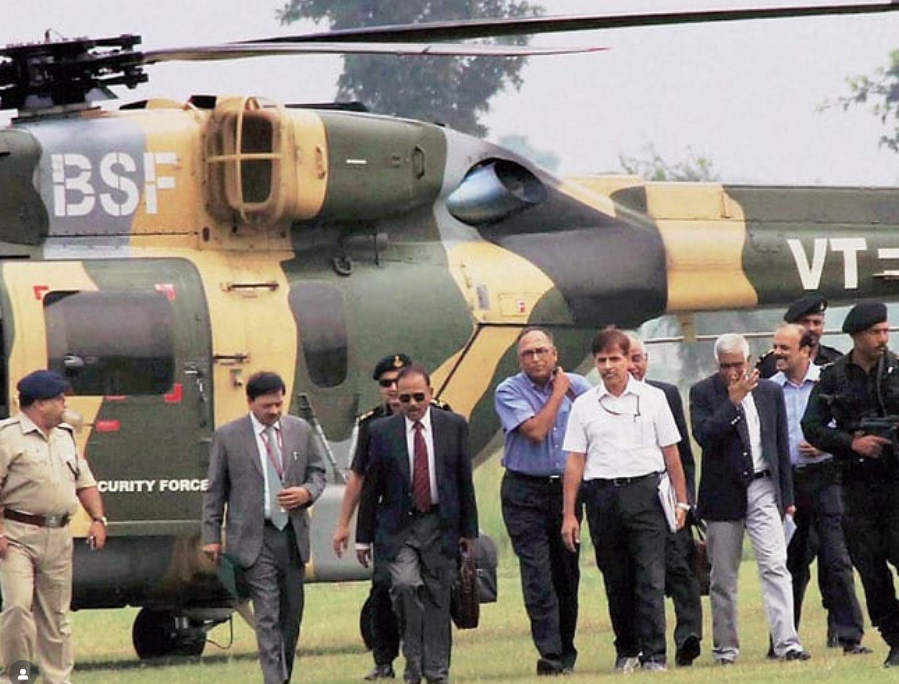
The Wife: The Unsung Hero
Though largely out of public view, Ajit Doval’s wife has played an indispensable role in his life. Managing a household while her husband worked on high-risk, often life-threatening intelligence operations demanded tremendous patience, courage, and discretion. She created a stable home environment, allowing Doval to focus entirely on his missions without concern for domestic affairs. Stories of her unknowingly hosting insurgents during early Mizoram operations highlight her inadvertent yet critical role in supporting his clandestine work—a testament to the silent sacrifices made by families of intelligence officers.
Controversies, Allegations & Vindication
Doval and his family faced repeated political allegations. His son Vivek Doval was accused of financial impropriety but Congress leader Jairam Ramesh publicly apologized in writing, ending the controversy.
Despite relentless attacks, Doval remained unmoved focused solely on national security.
Ajit Doval’s legacy is not built on speeches or popularity. It is built on outcomes quiet, decisive, and lasting. He represents a rare breed of leadership where intelligence outweighs ego, and national interest stands above all else.
In India’s modern history, Ajit Doval will be remembered not as a man of power but as the strategist who guarded the nation from the shadows.